Public sector organizations play a critical role in delivering essential services, managing public funds, and implementing government policies. Whether in healthcare, education, infrastructure, or public administration, citizens expect these institutions to operate efficiently, transparently, and responsibly.
However, many public organizations continue to face challenges such as financial mismanagement, weak oversight, inefficient resource utilization, and poor service delivery. Strengthening governance has therefore become a priority for governments worldwide.
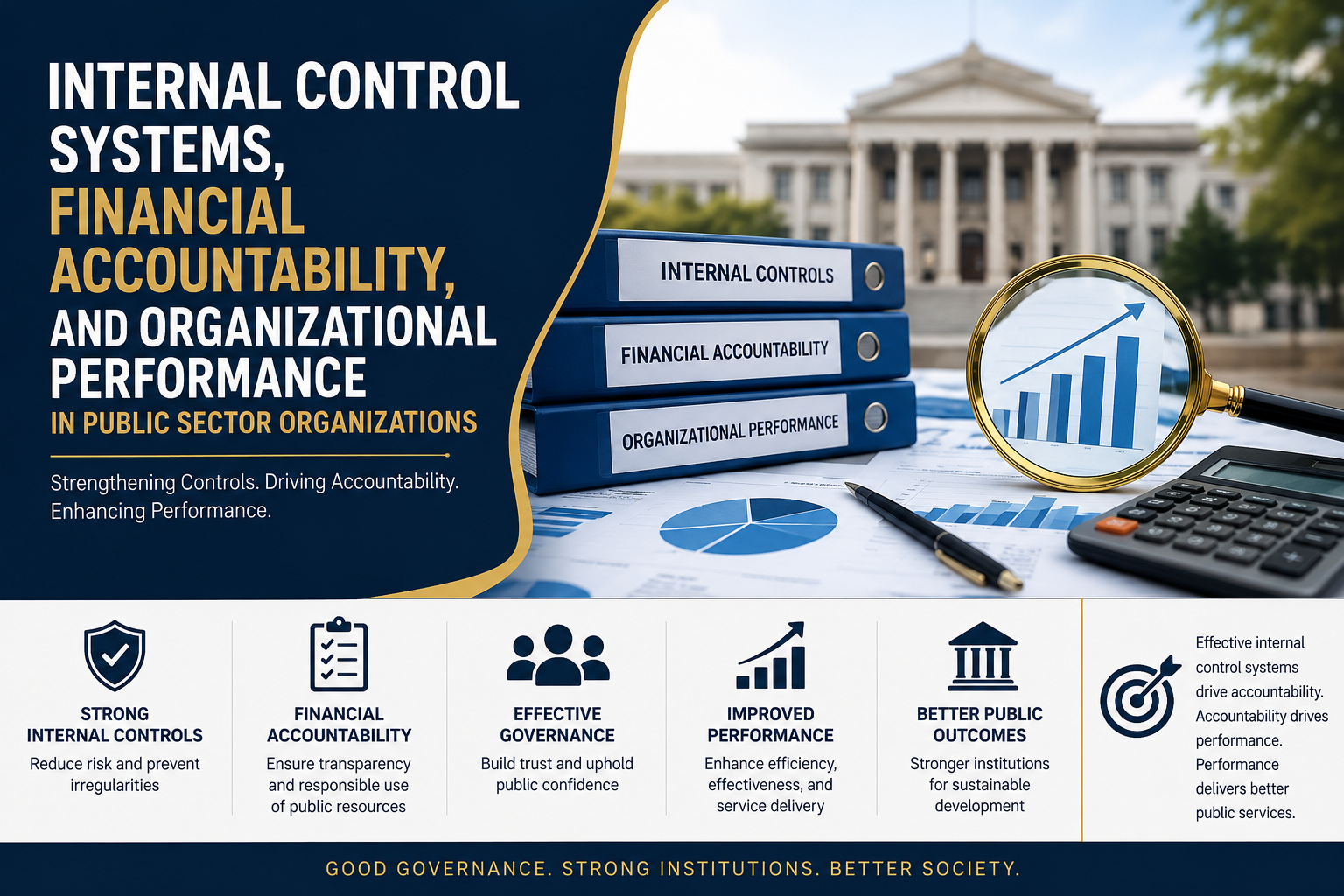
My latest research, “Internal Control Systems, Financial Accountability, and Organizational Performance in Public Sector Organizations,” examines how effective internal control systems contribute to financial accountability and improve organizational performance.
Why This Research Matters
Public trust depends on how responsibly governments manage public resources. Strong governance is not only about developing policies but also about ensuring that financial processes are transparent, accountable, and supported by effective oversight mechanisms.
Internal control systems provide the structure needed to safeguard public resources, minimize errors and fraud, ensure compliance with regulations, and improve operational efficiency.
This study explores an important question:
How do internal control systems influence financial accountability and organizational performance in public sector organizations?
Understanding this relationship can help policymakers and public administrators design stronger governance frameworks that improve both financial management and service delivery.
What the Study Examined
The research investigated the connections between three key concepts:
- Internal control systems
- Financial accountability
- Organizational performance
Using a quantitative research approach, data were collected from 150 employees involved in financial management and auditing functions across selected public sector organizations.
The study applied descriptive statistics and multiple regression analysis to evaluate how these variables interact and whether financial accountability serves as a bridge between internal controls and organizational performance.
Understanding Internal Control Systems
Internal control systems consist of the policies, procedures, and governance mechanisms that organizations use to manage risk and ensure accountability.
Examples include:
- Authorization and approval procedures
- Financial reporting controls
- Segregation of duties
- Internal auditing
- Risk assessment processes
- Compliance monitoring
- Asset protection measures
When properly implemented, these controls help organizations detect irregularities early, reduce opportunities for fraud, and improve the reliability of financial information.
Key Findings
The findings demonstrate a strong relationship between internal control systems and organizational effectiveness.
The study found that organizations with stronger internal controls are more likely to demonstrate higher levels of financial accountability. Employees are better able to follow established procedures, financial reporting becomes more reliable, and decision-makers gain greater confidence in the integrity of organizational information.
The research also found that financial accountability has a significant positive impact on organizational performance. Organizations that maintain transparent financial practices tend to allocate resources more effectively, improve operational efficiency, and deliver higher-quality public services.
Another important finding is that internal control systems influence organizational performance in two ways. First, they have a direct positive effect by improving operational processes and reducing financial risks. Second, they improve performance indirectly by strengthening financial accountability, which acts as an important link between governance practices and organizational outcomes.
Why Financial Accountability Matters
Financial accountability extends beyond preparing accurate financial reports.
It involves ensuring that public funds are managed responsibly, expenditures are properly documented, financial decisions are transparent, and organizations remain accountable to citizens and oversight institutions.
Strong financial accountability supports:
- Better resource allocation
- Increased transparency
- Improved public trust
- Reduced financial irregularities
- More informed decision-making
- Enhanced organizational credibility
These outcomes ultimately contribute to better public services and stronger institutional performance.
Practical Implications for Public Sector Organizations
The findings suggest several practical strategies for strengthening governance within public institutions.
Organizations should continuously review and improve their internal control frameworks to ensure they remain effective in changing operational environments.
Investing in staff training can help employees understand financial regulations, risk management practices, and accountability responsibilities.
Internal audit functions should be adequately resourced to provide independent oversight and identify potential weaknesses before they become significant problems.
Performance evaluation systems should also include accountability indicators alongside traditional operational metrics. Measuring both financial responsibility and organizational outcomes provides a more complete picture of institutional effectiveness.
Finally, leaders should promote a culture of transparency and ethical conduct where accountability becomes an integral part of everyday decision-making rather than simply a compliance requirement.
Looking Ahead
As governments continue pursuing public sector reforms, strengthening internal control systems will remain essential for improving governance and building public confidence.
This research highlights that effective internal controls do more than prevent financial errors. They create the conditions for stronger accountability, better resource management, and improved organizational performance.
By investing in robust governance frameworks, public institutions can enhance transparency, improve efficiency, and deliver higher-quality services to the communities they serve.
Read the Full Publication
Title: Internal Control Systems, Financial Accountability, and Organizational Performance in Public Sector Organizations
The study provides empirical evidence demonstrating how internal control systems strengthen financial accountability and contribute to improved organizational performance, offering practical insights for policymakers, auditors, public managers, and governance professionals.
About the Author
Emmanuel Agbeko Enyo is a data analytics professional and researcher whose work focuses on artificial intelligence, governance, healthcare analytics, organizational performance, and data-driven decision-making. His research explores how evidence-based policies, emerging technologies, and effective management practices can improve organizational outcomes across both public and private sectors.