Artificial intelligence (AI) is rapidly changing the way healthcare professionals detect, diagnose, and manage disease. From analyzing medical images to identifying patterns in electronic health records and wearable devices, AI has become one of the most promising technologies for improving patient care.
I am pleased to share that my latest research, “AI-driven Healthcare Analytics for Early Disease Detection: A Scoping Review of Clinical Applications, Validation, and Translational Challenges,” has been published in the American Journal of Medicine and Health Studies.
Why This Research Matters
Early detection is one of the most important factors influencing patient outcomes. Many serious diseases, including cancer, sepsis, chronic kidney disease, diabetic retinopathy, tuberculosis, and cardiovascular conditions, can be treated more effectively when identified at an earlier stage.
In recent years, researchers have developed AI models capable of analyzing enormous amounts of healthcare data in ways that would be difficult or impossible through manual review alone. However, while hundreds of studies report impressive performance, an important question remains:
How ready are these AI systems for routine clinical practice?
This question motivated the development of this scoping review.
What the Review Examined
The study systematically reviewed peer-reviewed research published between 2018 and 2025 to understand how AI is currently being used for early disease detection.
Following the Arksey and O’Malley methodological framework and the PRISMA-ScR reporting guidelines, the review examined empirical studies involving multiple healthcare domains and AI applications.
The review analyzed:
- Medical imaging applications
- Electronic health records (EHR)
- Wearable health technologies
- Physiological signal analysis
- Biomarker and lipidomic data
- Machine learning and deep learning approaches
- Validation strategies
- Clinical implementation readiness
Rather than focusing on a single disease, the review explored AI applications across numerous medical specialties.
Diseases Covered
The evidence included AI applications for:
- Sepsis and septic shock
- Breast cancer
- Skin cancer
- Lung cancer
- Pulmonary nodules
- Colorectal polyps
- Diabetic retinopathy
- Tuberculosis
- Pancreatic cancer
- Atrial fibrillation
- Chronic kidney disease
This diversity illustrates the growing role of AI throughout modern healthcare.
Key Findings
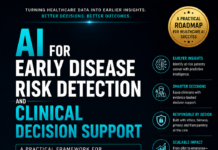
One of the strongest findings from the review is that AI consistently demonstrates the ability to assist clinicians in identifying disease earlier and supporting clinical decision-making.
Across multiple studies, AI systems showed potential to:
- Detect disease earlier than conventional approaches
- Reduce missed abnormalities
- Prioritize patients based on risk
- Improve diagnostic efficiency
- Support clinical workflows
- Assist healthcare professionals with evidence-based decision making
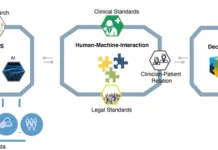
Importantly, the review also found that AI should currently be viewed as a clinical decision-support technology rather than a replacement for clinicians. Human expertise remains essential for interpretation, diagnosis, and patient management.
The Importance of Validation
Although many studies reported high levels of diagnostic performance, not all evidence carried the same strength.
AI models that performed well in one hospital or research dataset often require additional testing before being applied elsewhere.
The review highlights several critical requirements for successful implementation:
- External validation across different patient populations
- Prospective clinical evaluation
- Local adaptation to healthcare environments
- Continuous monitoring after deployment
- Transparent and reproducible model development
Without these steps, promising AI systems may not achieve reliable performance in real-world healthcare settings.
Looking Ahead
Healthcare is entering an era where AI has the potential to become a routine component of clinical practice. As healthcare organizations continue adopting digital technologies, the combination of artificial intelligence and clinician expertise can improve patient outcomes, increase efficiency, and support earlier intervention.
However, widespread adoption should be guided by rigorous scientific evidence, responsible implementation, and ongoing evaluation to ensure that AI systems remain accurate, fair, and clinically useful.
Read the Full Publication
The complete peer-reviewed article is available through the American Journal of Medicine and Health Studies.
Title: AI-driven Healthcare Analytics for Early Disease Detection: A Scoping Review of Clinical Applications, Validation, and Translational Challenges
DOI: AI-driven healthcare analytics for early disease detection: A scoping review of clinical applications, validation, and translational challenges | American Journal of Medicine and Health Studies
About the Author
Emmanuel Agbeko Enyo is a Data Analytics graduate from George Washington University whose research focuses on artificial intelligence, healthcare analytics, machine learning, and data-driven clinical decision support. His work explores how AI can be responsibly integrated into healthcare systems to improve patient outcomes while maintaining transparency, reliability, and real-world applicability.